Please Review 10 Second Voice Test

I’ll take every opinion anyone wants to take the time to give me. Some will match what I’m trying to do and capable of doing, some, not so much. All valuable.

That whole thing about ACX not allowing a short audiobook test freaks me out. I submitted a sample to ACX Audio-lab but that didn’t seem to provide any more detail beyond what ACX-check provides. Maybe I’m wrong and ACX Audio-lab is providing more?

Anyway, grateful for all the help I’ve received in this forum. Some day, I will be able to at least listen to someone else’s submission and give my humble “opinion.” Looking forward to returning the favor, thank you.

1 Like

I must not have the parameters set correctly on de-clicker and de-esser (the free plugins made available by NY) as neither seems to do much of anything to my files. So far, my approach has been to manually edit the file. As you and Koz explained, I need to get better at my voice performance so I don’t have so many fixes to make in the first place.

Theresa

The Audacity de-clicker and de-esser plugins are slow to adjust to the sweet spot as they don’t work in realtime.

There are free realtime de-esser plugins that work in Audacity,
there are realtime de-clicker plugins that work in Audacity, but I don’t know of a free one.

De-essing, de-click, de-breath, de-noise, EQ can now done by AI.

Less.
ACX Audiolab doesn’t check noise.

By that I mean they used to provide a human review of your work, signed by the reviewer. It is suggested that they would palaver with you as to the best method of solving your problems. No. You got one review, full stop. Now it’s your problem.

“Dear Koz. Your mouth noises suck. Have a happy day.” It was more involved than that, but I didn’t give up the day job.

What it meant to say is the Absolute Blackness of Space, Dead Silence you stuck in there isn’t natural. When you take a breath, you’re supposed to get natural room tone, background sound. And yes, that’s where Punch-Paste, etc come in.

A few notes about how 36Audio… works.

36Audio… is a Macro which in this case is a call list of existing tools. It’s not a tool. It’s a recipe. It’s named “36Macro…” because one of the Audacity application updates scattered the tools in its list. From memory, version 36. It’s like going to the credenza for your spatula and it’s not there. “What do you mean the Limiter Tool isn’t there any more?” !@#$

The very first thing 36Audio does is apply a Rumble Filter. This is from Broadcast/Field Recording experiences. Thunder, earthquakes, large trucks, wind, etc. Gone. If a large portion of your natural background noise happens to fall into that category, your ACX-Check noise value will do some amazing things.

Then it applies a volume boost (or dip) so ACX-Check RMS (loudness) comes out right. Note, it makes one overall adjustment. It doesn’t try to follow your voice or the theatrical presentation.

That adjustment might force some tips and peaks of the performance to exceed 100% (1.0). That’s the point where the performance starts making up its own harsh sounds (ticking and popping). So then 36Audio applies a gentle Peak Limiter to gracefully squeeze just the tips and peaks into ACX submission.

Yes, that does change the RMS (loudness), but never enough to matter.

36Audio doesn’t do a thing to the noise. It guarantees RMS (loudness) and Peak standards. If you recorded in a quiet, echo-free room, you may be done.

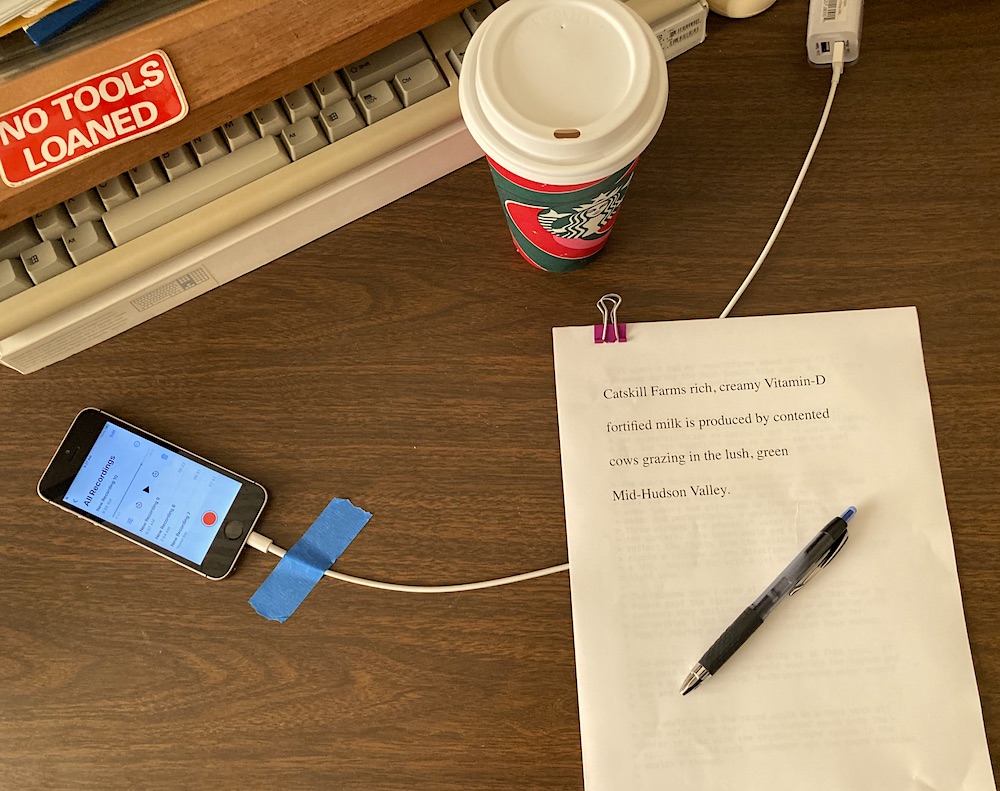
Just as proof of performance, I recorded a voice test in my quiet office on my phone.

I cut it down to size, applied 36Audio… and it passes ACX-Check.

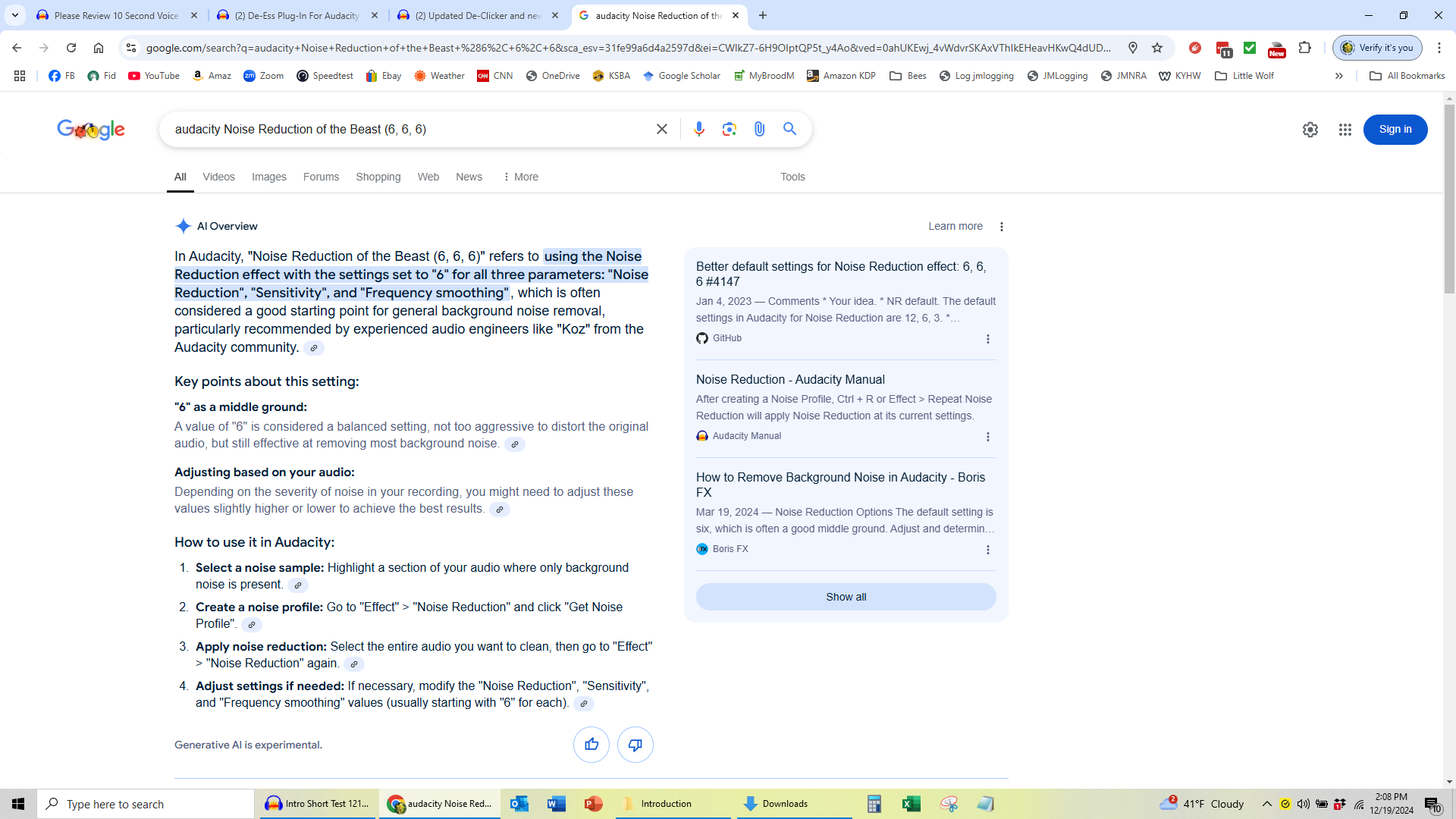
But it’s close. Being obsessive, I applied gentle Noise Reduction of the Beast (6, 6, 6).

One of the goals of 36Audio… is that the finished work sounds exactly like me.

Koz
ACX’s number one instruction is “No Distractions.”

Do you think the rhythm would work out better if you read each sentence twice?

You are listening to yourself on the headphones, right?

After you get used to that, listening to yourself can go a long way to polishing your delivery.

Koz

This helps a lot. Each time you reply, I look up something new to learn more.

AI knows you, Koz…

No, I don’t think reading each sentence twice is the answer for me. Honestly, you already fixed it for me by pointing out I’m putting in spaces all over the place that are not in my writing. Instead, I need to read it as I wrote it, with commas, sentence breaks, paragraph breaks and section breaks, each with regular and appropriate spacing. I don’t know why but I didn’t notice any of this until you pointed it out. HUGELY helpful. So, I’ve been wandering around my house walking and reading my book aloud and practicing. I’m getting better at it already.

Yes, I’m listening to myself on my headphones through the monitor while recording and upon playback. I just did 4 minutes of recording and editing my Introduction. It’s already sounding better, more confident, more interesting, faster and with less editing needed. “Practice makes prefect” is not me. “Practice makes you better than you were before,” is me. Perfect, nope. Better, yes.

Thanks for the links to these tools. There sure are a lot of sophisticated tools. Checking them out now.

From a note of yours up the thread. Many people are horrified at what they sound like the first time they hear themselves recorded. “Do I really sound like that?”

That’s why I suggest the goal is telling somebody a fascinating story over cups of tea, not precisely announcing an audiobook product.

There’s no big rush, either. I don’t think it’s posted any more, but the all-time winner was that guy on La Brea in Los Angeles who wanted to break into announcing. We got him working OK—after about a year of forum postings.

“No, dear, you really do need to pause while the fire engines go by—then back up an even, whole sentence and pick it up there.”

Koz

It would be hard to avoid. I’m counted as one of the founders even though I wasn’t there at the actual beginning.

Koz

1 Like

Well… I’m sort of a “focus and finish” kind of person. Which is good because I only have a short window to get this audiobook done. I need it finished by about March 1. I think I can do it. It’s just who I am. I wrote my book, first word to paper to published on Amazon, in 6 months and it’s not bad, so the readers and reviewers say.

https://www.beeculture.com/book-review-7/

You all have been super awesome. You remind me of the beekeeping community, except even more nice. Your feedback is direct, balanced, yet kind. Cool group, you’ve got here.

If it’s OK, I’ll do another 20 second clip of my work and post to ask you all if I’m getting closer, from both a technical and performance perspective.

Theresa

No, it’s definitely not totally terrible. :slight_smile: You could find somebody who would work with this on little touchups and you’d be fine for most uses.

I record my voice all the time for radio, podcasts, and audiobooks. I think it can be difficult for us to really hear ourselves, especially if we’re already “critical” people.

Something I’ve discovered is that most audio, as long as it’s recorded with a quality mic and you have a good signal, can be fixed. If needed, you can always hire out somebody to edit any breath issues, clicks, etc. And as has been mentioned, some of the plugins these days are VERY good. I use Izotope RX for most of my stuff and it works well.

Thanks, David. I’ll post a new “final” 20 second sample soon. Always interested in feedback on how I can improve. You all have been wonderfully helpful.

My version of that is recording in a quiet, echo-free room. The test I recorded was with an iPhone SE (first gen) lying on the desk in my soundproofed office. It turns out the original owner of this house had a son that played drums. They soundproofed the tiny third bedroom in self defense.

Showing up with slap or echo (or both) in your presentation can be deadly. Echo is your own voice arriving at the microphone after having bounced from the walls. You are, in effect, asking software to remove your voice from itself. Doesn’t matter if the microphone is award-winning or highly rated.

And that brings us to chugging along at midnight because you can’t get the patching software to behave. Also see (although this is strictly forbidden) getting a software package to actually announce the work and clean up the one or two theatrical errors. You want to drive AI nuts, include part numbers or a version designation. To mix a metaphor, imagine a software package with steam coming out of its ears.

I’m on the edge of my seat.

Although we urge you to present a 20 second mono WAV file, if you create the ACX MP3 quality file (Constant 192, Mono, etc), you can produce a much longer performance. It just has to come in under 2MB. I get about a minute and a quarter. I think we’re much more interested in your story-telling now, than lip-smacks, tongue-ticks, and glottal stops.

Koz

2 Likes

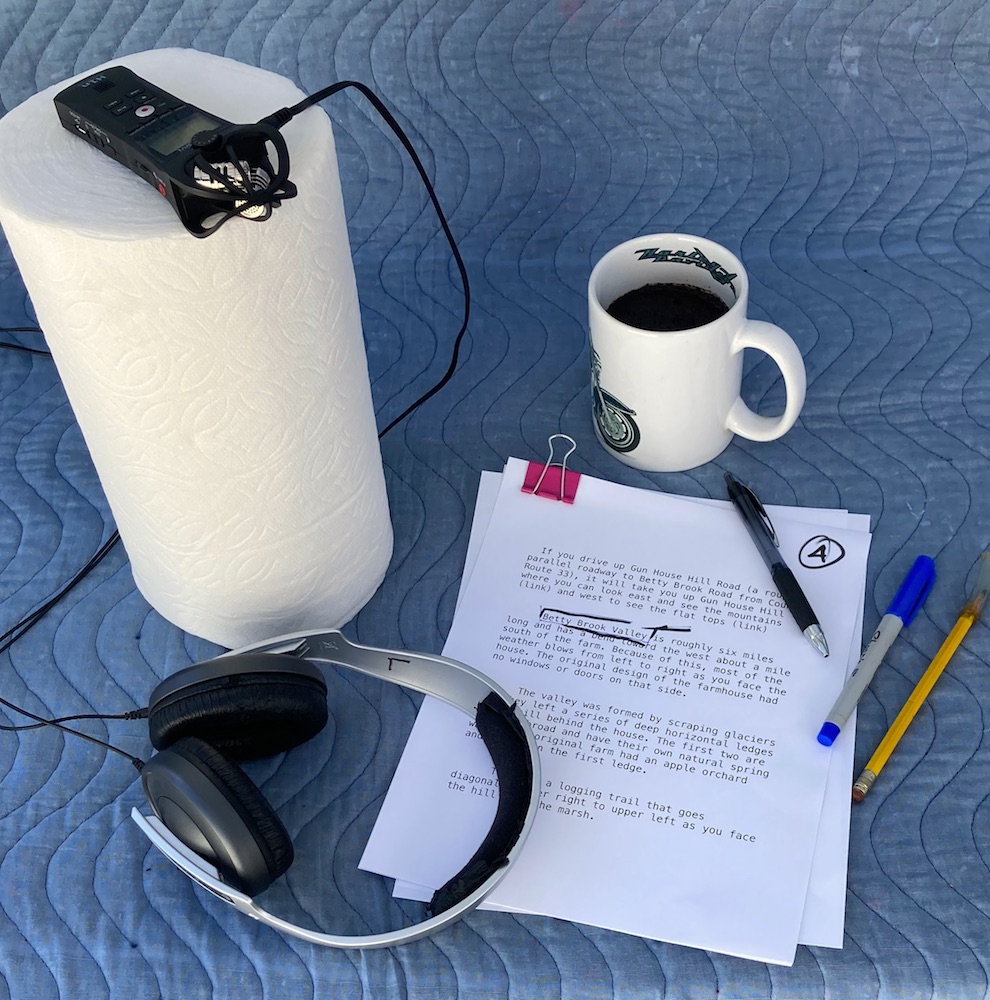
That’s not to say you can’t get a microphone to help. It’s just not what the Promotion and Publicy Office would like. This is (I believe) a Sennheiser shotgun microphone in interview configuration.

It’s rejecting almost all of the surrounding room trash in favor of the voice. The catch? He’s holding about $1100 not counting the cable and Phantom Power recorder.

Koz

2 Likes

And there’s a story behind that.

Ira Glass (WBEZ - Chicago Public Radio) pulled off a very difficult field interview with a hand-held shotgun microphone. Until then, it was widely assumed that would never work and he was wasting his time. Then he started producing interviews on a regular basis and the technique became popular.

Koz

2 Likes

These things are great, but as you’ve alluded to, there’s not a lot of wiggle room. You’ve really got to pay attention to the placement, which I’d found to be a distraction when interviewing.

I do most of my field interviews with an SM58, since it’s far more forgiving, but am considering moving to a super-cardioid mic as it’s somewhere in the middle.

They’re impossible to break. One of the performer/technicians at work borrowed ours for a show and it came back in two pieces. Electrically, it was still OK, so I pieced it back together and as far as I know it’s still working.

SM58s are impossible to overload and are generally seen as screamer microphones.

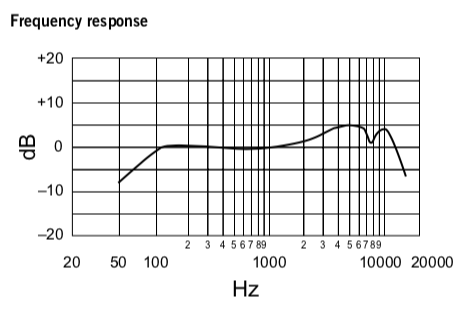
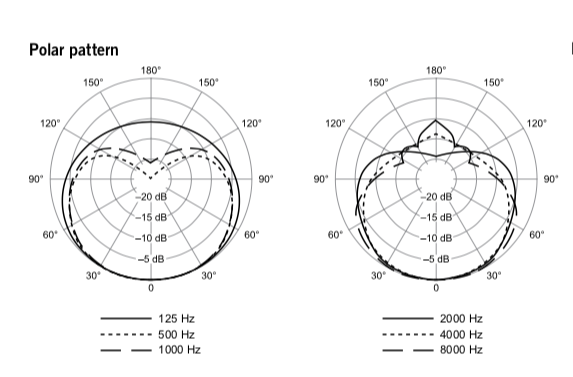
That’s one of their illustrations.

What don’t you like about it? I can see where it wouldn’t be able to reject room echoes, dogs barking or busses driving by. Its response is broad.

SM58 has vocal boost. It’s “bright”.

That could make it rough to match other systems. That would also boost sibilance and mouth noises.

Such as? The SM58 is a Dynamic (moving coil) microphone and doesn’t need phantom power.

What are you using as a field recorder? Are you scoffing at the people who aim their iPhone at the interviewee? That’s not the worst way to conduct an interview, especially since it’s not always obvious you’re recording.

I was one of the phones sitting on the table. As far as I know, I was the only one recording.

Koz

1 Like